
A Grounded, Whole-Plant Guide to How Cannabis Works — The Benefits, The Risks, and Why Context Matters
- Jordan Thomas

- Feb 2
- 5 min read
Updated: Mar 9
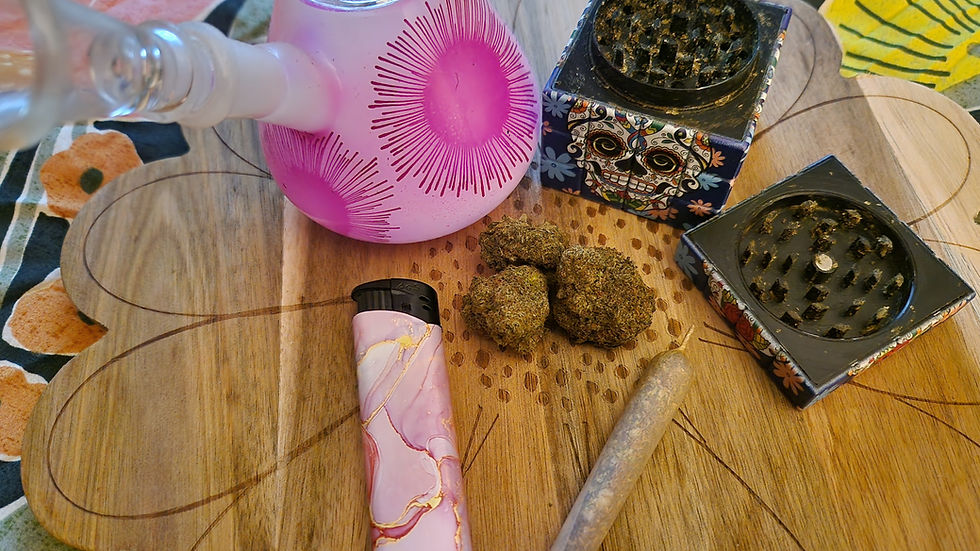
Cannabis Isn’t One Thing — And That Matters
This post offers an educational, whole-plant explanation of how cannabis interacts with the nervous and immune systems. It includes potential benefits, risks, and variability between individuals.
Cannabis is often discussed as if it’s a single substance. It isn’t. It’s a biologically active plant system containing hundreds of compounds that interact with the body in layered, complex ways. Some of those compounds act strongly on the nervous system, while others quietly protect, buffer, and stabilise the experience.
When people argue about whether cannabis is “good” or “bad,” they’re usually talking past the biology. The truth lives in the middle — and in the details.
What Cannabis Actually Contains
Cannabis is made up of:
Cannabinoids — the primary compounds that interact with the nervous and immune systems
Terpenes — aromatic compounds that shape mood, alertness, and emotional tone
Flavonoids — anti-inflammatory, antioxidant, tissue-protective compounds
Plus plant waxes, fats, fibres, and chlorophyll
These compounds don’t act in isolation. They act together.
The Body System Cannabis Interacts With
Cannabis works because humans have an endocannabinoid system (ECS). The ECS exists to help regulate:
Stress response
Pain perception
Mood
Sleep
Appetite
Immune activity
Nervous system recovery
Your body already produces its own cannabinoids to do this. Cannabis compounds interact with that same system — sometimes supporting it, sometimes overwhelming it, depending on dose, balance, and context.
This system-level interaction makes more sense when you understand basic nervous system function, outlined in what is the nervous system?.
Cannabinoid Receptors: Where Cannabis Acts
CB1 Receptors — Perception & The Nervous System
CB1 receptors are found mainly in the:
Brain
Central nervous system
Spinal cord
They influence:
Mood
Memory
Fear response
Sensory processing
Coordination
Pain perception
These receptors explain why cannabis affects how reality feels, not just physical symptoms.
CB2 Receptors — Immunity & Inflammation
CB2 receptors are found mainly in:
Immune cells
Gut
Peripheral tissues
Sites of inflammation
They influence:
Immune regulation
Inflammatory response
Tissue-level pain
Healing processes
CB2 activation does not cause intoxication. Many of cannabis’s therapeutic effects — especially for pain and inflammation — come from this pathway.
Cannabinoids: The Primary Active Compounds
THC (Tetrahydrocannabinol)
THC:
Strongly activates CB1 receptors
Moderately activates CB2 receptors
Crosses the blood–brain barrier easily
It can:
Reduce pain and nausea
Increase appetite
Alter perception and time awareness
Reduce muscle spasticity
Increase heart rate
THC amplifies neural signalling. For some people, this feels relaxing and expansive. For others — especially those already stressed or trauma-sensitised — it can feel overwhelming or anxiety-provoking. That variability isn’t personal failure. It’s receptor biology.
CBD (Cannabidiol)
CBD:
Does not strongly activate CB1
Modulates how receptors respond
Increases availability of the body’s own endocannabinoids
It can:
Reduce seizure activity
Dampens nervous system reactivity
Reduce inflammation
Soften THC’s intensity
CBD doesn’t intoxicate. It buffers and stabilises. This is why CBD-rich preparations are often better tolerated and medically useful for many people.
Other Cannabinoids (Still Relevant)
CBG — Anti-inflammatory, mild mood support
CBN — Sedating for some, especially with pain or sleep issues
THCV — Stimulating in low doses, appetite-modulating
They don’t dominate the experience, but they shape it. Cannabinoids are one category of active plant compounds, which I explain more broadly in 'Active Plant Constituents Explained.'.
Terpenes: Why Different Cannabis Feels Different
Terpenes are aromatic compounds found throughout the plant world. In cannabis, they:
Influence mood and alertness
Shape anxiety vs calm
Steer sedation vs stimulation
Examples:
Myrcene — Sedating, heavy, body-focused
Limonene — Uplifting, energising (sometimes anxiety-provoking)
Pinene — Alertness and clarity
Linalool — Calming and anxiolytic
Terpenes don’t cause intoxication, but they change how THC is experienced.
Flavonoids: The Most Overlooked Part of Cannabis
Flavonoids are polyphenolic plant compounds found in many medicinal plants. In cannabis, they:
Reduce inflammation
Protect blood vessels
Stabilise histamine response
Reduce oxidative stress
Support tissue and nervous system recovery
Cannabis contains unique flavonoids (often called cannaflavins) that show strong anti-inflammatory and pain-reducing activity — without acting on CB1 receptors. Flavonoids don’t make you high. They reduce the physiological cost of cannabis use. This is one reason whole-plant cannabis often feels smoother and more tolerable than isolated THC products.
The Entourage Effect (What That Actually Means)
Cannabis works through compound interaction:
Cannabinoids drive the main effects
Terpenes shape mood and direction
Flavonoids protect and stabilise
Remove terpenes and flavonoids:
THC hits harder
Side effects increase
Anxiety risk rises
The experience feels harsher
This isn’t mysticism — it’s systems biology.
Where Cannabis Can Genuinely Help
For some people, cannabis is not just recreational — it’s life-changing or life-saving. There is strong evidence and long-standing clinical use for:
Seizure disorders, especially treatment-resistant epilepsy (CBD in particular)
Parkinson’s disease, including tremor, rigidity, and sleep disturbance
Cancer care, especially for nausea, appetite, pain, and quality of life
Chronic pain and inflammation, where conventional options are limited or harmful long-term
For some, cannabis provides relief where synthetic medications cause intolerable side effects, including:
Liver strain
Gastrointestinal damage
Dependence
Hormonal disruption
Cannabis is not side-effect free — but for some bodies, it is the least harmful effective option. That matters.
Where Caution Still Belongs (Without Fear)
Cannabis isn’t neutral. Potential issues include:
Anxiety or panic
Dissociation
Increased heart rate
Short-term memory impairment
Worsening symptoms in some mental health conditions
Risk increases with:
High THC
Low CBD
Chronic stress or trauma
Sleep deprivation
Lack of compound balance
This doesn’t cancel the benefits. It simply means context matters.

Why Cannabis Affects People So Differently
Response depends on:
Nervous system baseline
Stress load
Hormone levels
Sleep quality
Cannabinoid ratios
Terpene profile
Flavonoid presence
There is no universally “right” cannabis experience. Baseline nervous system patterns and stress load play a major role here, explored further in why nervous systems get stuck.
The Most Honest Way to Understand Cannabis
Cannabis is:
A nervous-system amplifier
A regulatory tool for some bodies
Destabilising for others
Medicinal, recreational, or both
It can reduce suffering. It can also reveal imbalance. Both can be true.
Closing Thought
Cannabis isn’t about escape or enlightenment. It’s about relationships — with your body, your nervous system, your limits, and your needs. Used with understanding, it can be a powerful ally. Used without context, it can overwhelm. Neither story needs to be exaggerated.
⚠️ Important Disclaimer
This content is provided for educational and informational purposes only. It is not intended to diagnose, treat, cure, or prevent any medical condition, and it should not be taken as medical, legal, or professional advice. Always consult a qualified healthcare professional before starting, stopping, or changing any medication or treatment — including plant-based or alternative therapies.
Everyone’s body, nervous system, and medical history is different. What works well for one person may not be appropriate or safe for another.
🌍 Legal & Location Notice
Cannabis laws vary widely by country, region, and local authority. The information shared here does not encourage or promote illegal activity. It is the reader’s responsibility to:
Understand the laws in their location
Comply with local regulations regarding possession, use, cultivation, or medical access
Legal status may differ between:
Medical and non-medical use
Plant material, extracts, oils, or isolates
THC-dominant and CBD-dominant products
Always check current local legislation before engaging with cannabis in any form.


Comments